
HEALING STARTS IN THE BODY, NOT THE MIND | WITH LIA YOUNG
There's a reason grief wakes you at exactly 3am, a reason your hip won't heal no matter what the doctors try, and a reason you keep pouring into a relationship that never fills back up…
Kinesiologist Lia Young explains all three… and what to do instead.
Arriving this Monday @ 6AM (AWST)
This episode includes discussion of suicidal ideation, pregnancy loss, and substance use. If anything in this episode raises something for you, Lifeline (13 11 14) and the Suicide Call Back Service (1300 659 467) are available 24/7.
Our full crisis services directory has more.
In this episode, you'll hear:
👉 How a kinesiology session actually works — Lia uses muscle-reflex testing to find where the body is holding stress, then treats it with specific tools (sound, oils, acupressure points, colour) matched to what shows up that day.
👉Your body may be storing emotion on one specific side — Lia explains the left side of the body as linked to feminine energy and the right to masculine, and why a stuck hip or a pain that won't resolve on one side specifically is worth paying attention to.
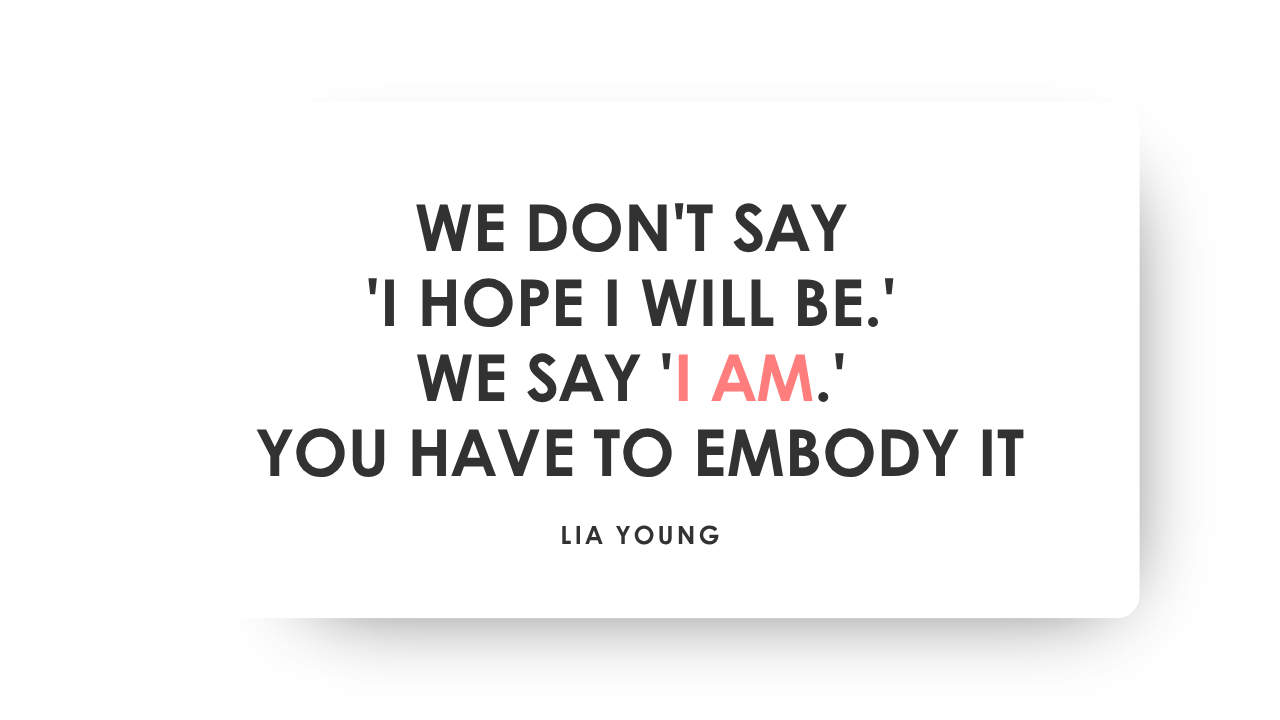
👉 A one-word language shift that changes whether an intention actually lands — Lia never lets a client say "I hope I will be." She has them say "I am" or "I feel" instead, because the body responds to embodiment, not aspiration.
👉Grief has a specific physical address and a specific wake-up time — Lia links grief to the lung meridian in Chinese medicine, which is why people going through loss often wake, with no obvious cause, between 3 and 5am.
The conversation
How a kinesiology session actually works
Lia's practice centres on muscle-reflex testing; a gentle, non-invasive method for reading where the body is holding stress, which she describes as tapping directly into the subconscious mind: the place memories, patterns, and beliefs are actually stored. Once Lia identifies what's showing up for a client that day, she treats it with whatever the body indicates it needs. That might be an essential oil, a specific acupressure point, sound from a drum or singing bowl, crystals, or colour therapy.
What your body might be trying to tell you
A few of the specific correlations Lia works with are worth knowing even outside a session. She links the left side of the body to feminine energy and the right to masculine, and points to the hips specifically as where a lot of stored emotion lives, which is why people sometimes get unexpectedly emotional moving their hips in a workout. She also describes physical ailments that won't resolve through conventional treatment; in her own case, a stuck hip joint doctors couldn't explain, as sometimes pointing to an emotional block rather than a purely physical one. None of this replaces medical care, but it's a different lens for a pain or tightness that medicine alone hasn't been able to shift.
The "I am" rule: a specific language technique Lia uses with every client
One of the most immediately usable things in this episode is a small language rule. When a client sets a goal for how they want to feel, Lia won't let them phrase it as "I hope I will be"… she has them say "I am," "I have," or "I feel" instead. The logic: the body responds to embodiment, not aspiration, so the language you use to set an intention changes whether it actually lands.
Where grief physically shows up, and when
Rather than the well-worn idea that grief "isn't linear," Lia gives a specific, physical account of what that means. In her framework, grief is linked to the lung meridian, which is why people moving through loss often wake, for no obvious reason, specifically between 3 and 5am. She also describes exactly where she felt her own grief sit physically (around the heart and solar plexus, and at times a sharp sensation near the liver), and the specific practice she used to work through it… sitting with a stick of palo santo and tracing spirals through the air around her body, until the sensation cleared. Her acupuncturist, treating her with Chinese medicine at the same time, told her to keep doing it, because it was visibly working.
Loving someone through addiction
Lia hasn't experienced addiction herself, but has been in multiple relationships with people who have. The pattern she names specifically: an anxious attachment style meeting an avoidant one, where the more she tried to give, the more her partner withdrew… a cycle she describes as pouring into a cup that never fills. She was told she was "too emotional" or "too needy" for having ordinary needs, which is a common experience for partners of someone in addiction, and one that's rarely named as clearly as she names it here.
Reconnecting with your body when you feel disconnected
Lia's practical answer to "I feel stuck in my head":
Close your eyes, place one hand on your heart and one on your belly, and breathe for even two minutes. She says the shift is noticeable immediately.
For people who feel physically disconnected from their own body, her suggestion is more specific than it sounds… literally hold yourself, the way you'd hold a friend, because most people default to a harsher internal voice with themselves than they ever would with someone else.
-
Muscle reflex testing works by applying light pressure to a muscle, usually the arm, held out to the side, while the client holds a specific thought, memory, or statement in mind.
The muscle either stays strong and resists the pressure, or "gives way" and goes weak, and that response is read as the body's yes/no signal, bypassing conscious thought to indicate what it's registering as stress.
A kinesiologist uses that feedback to identify where emotional, mental, or physical stress connected to memories or past experiences is being held, then treats what comes up with tools like acupressure points, sound, or colour therapy.
-
In Traditional Chinese Medicine, this window is linked to the lung meridian, which is associated with grief. It lines up with something well documented in bereavement research more broadly: disrupted sleep, including waking in the early hours, is one of the most common physical symptoms of grief, alongside chest tightness, fatigue, and appetite changes.
-
Yes! Lia and other kinesiologists offer remote sessions, working with a client's energy rather than requiring physical contact. Lia herself works with clients across Australia this way, not only where she's based in Melbourne.
-
This comes from yin-yang philosophy in Traditional Chinese Medicine, where yin (traditionally associated with the left side of the body, and with feminine qualities) and yang (the right side, masculine qualities) represent complementary forces the body seeks to keep in balance.
It's one of the oldest frameworks in Chinese medicine, dating back thousands of years, and still underpins many of its modern applications, including acupuncture and energy-based practices like kinesiology.
-
In Lia's own relationships, this played out as a specific attachment pattern: the more she tried to give, connect, or fix things, the more her partner… pulled by addiction and its own weight of shame and guilt, withdrew further, what she describes as pouring into a cup that never fills.
Shame is one of the most consistently documented drivers of addiction cycles: it tends to push the person using toward more secrecy and more distance, which is often mistaken by their partner as not caring, when it's frequently the opposite; an attempt to hide from judgment, including their own.
That combination, an anxious partner trying to close the gap, an avoidant, shame-carrying partner trying to widen it… is what made Lia's experience feel like a pattern she couldn't out-love her way through.
About Lia Young
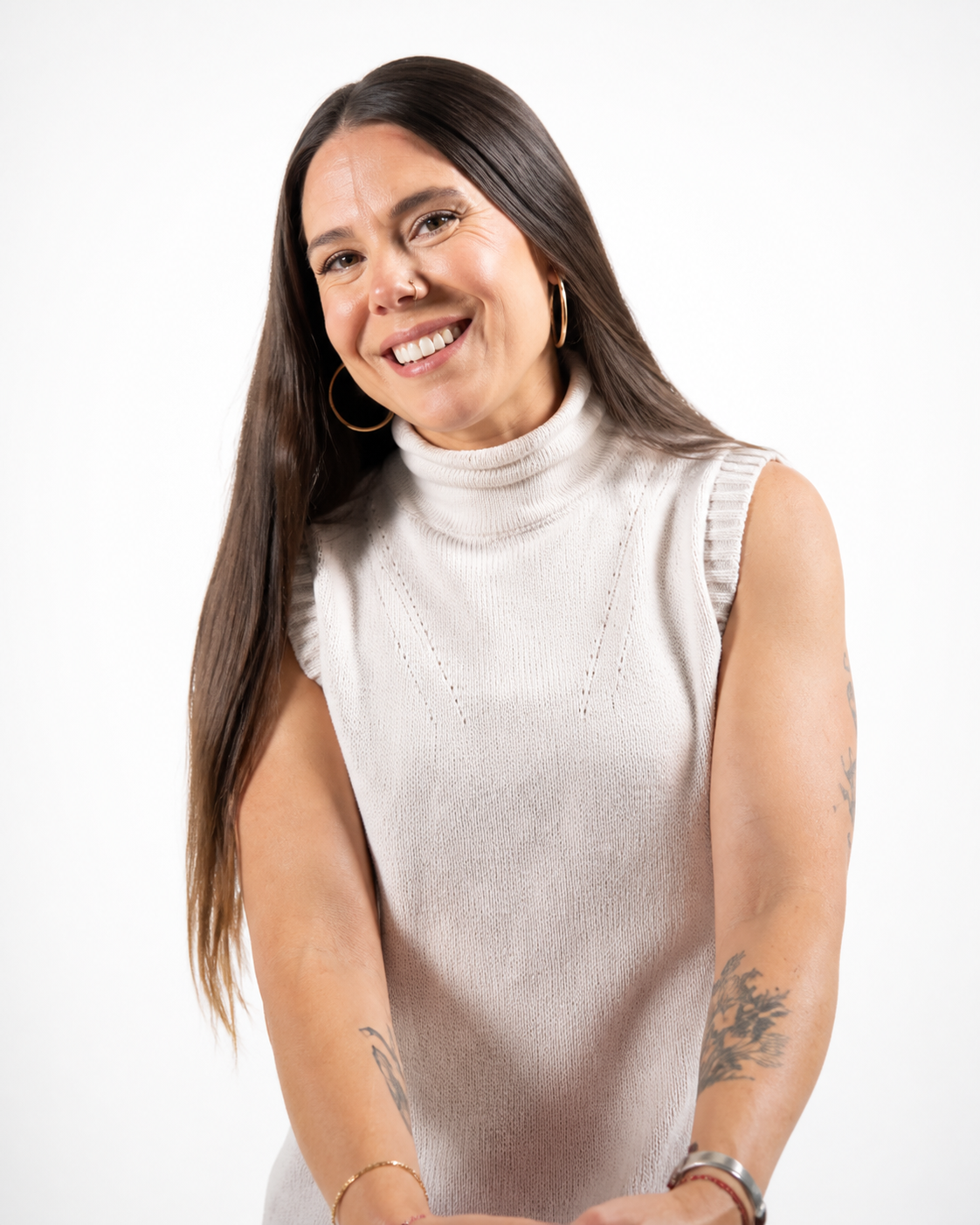
Lia Young is an emotions and metaphysical kinesiologist, holistic fitness coach, and founder of Devotion in Motion Wellness, based in Melbourne and working with clients both in person and online across Australia.
She spent five years as a fitness coach before moving into healthcare during COVID, then trained in kinesiology after becoming frustrated with a symptom-first approach to health that left patients feeling unheard.
Her practice blends muscle-reflex testing, breathwork, sound healing, and movement to help clients reconnect the emotional and physical sides of their own healing.
👉 New here? Lia's offering Sh*ts F*cked listeners a free discovery call! Book yours today →
