
20 Years in Addiction and Still Not Too Far Gone | with Chrissoula D’orsogna
Twenty years of heroin addiction.
One overdose that nearly killed her in her own grandmother's home. And now, Chrissoula D'Orsogna spends her days teaching women how to build the strongest bodies of their lives.
NOW STREAMING ON ALL MAJOR PLATFORMS
This episode includes discussion of childhood sexual abuse, addiction, overdose, incarceration and suicidal thoughts. If anything in this conversation raises something for you, Lifeline (13 11 14), Suicide Call Back Service (1300 659 467) and the National Alcohol and Other Drug Hotline (1800 250 015) are available for support.
Our full crisis services directory has more.
In this episode, you'll hear:
👉 The first time Chrissoula used heroin wasn't at a party or with friends… it happened in the days after a police chase left her hospitalised at 15, and it's not the high she says she remembers chasing afterwards.
👉 Her habit climbed from $50 a hit to roughly $500 a day. Becoming a dealer herself wasn't a rock-bottom moment for her; she in fact describes it as the obvious next step, once stealing simply stopped being fast enough.
👉 She was in and out of youth detention and prison for most of her teens and twenties, but her longest stretch was a single continuous two-year sentence in Bandyup with no parole, after being caught smoking dope inside. Her daughter lived with Chrissoula's own father and grandmother for that period.
👉 The thing she credits with keeping her clean for over a decade wasn't therapy, medication, or a program. It was something almost accidental, and most people wouldn't guess it.
The conversation
How a police chase led to her first hit of heroin
At 15, Chrissoula was driving a stolen car with friends when police tried to pull her over. She didn't stop. The chase ended when she ran a red light and was T-boned, fracturing her pelvis, breaking ribs, and cutting her head badly enough that she carried fragments of glass in her scalp for the next 15 years. She spent about a week in hospital on morphine and pethidine for the pain, and because the car was stolen, she says hospital staff discharged her as soon as she could use crutches, without fully cleaning the wound.
Still in significant pain and with nothing prescribed to manage it, she went to someone she knew for help. They offered her heroin, smoked off foil. She says the relief wasn't just physical… it was the first time the self-criticism running in her head went quiet. That relief is what led to the next 20 years of her life in addiction.
Funding a $500-a-day habit
Chrissoula describes the escalation in concrete terms: a "point" of heroin cost around $50 and initially lasted her two hits; within a few days that had scaled to needing a quarter, then a half-weight, as her tolerance climbed and the same amount stopped lasting as long. At the habit's peak she says she was spending up to $500 a day.
She funded it first through shoplifting (she says most of her criminal charges came from being caught stealing from shops) then by selling stolen goods, then by dealing heroin herself from around age 16 or 17. Eventually that extended to breaking into houses, something she says she's not proud of and finds hard to reconcile with how violated she'd feel if it happened to her now.
In and out of prison for a decade, then one sentence served in full
Chrissoula was in and out of youth detention through her teens (Rangeview, Longmore, and later Banksia Hill), then adult custody at Bandyup from 18 onward. Her longest single stretch was a continuous two-year sentence around age 24, served in full, without parole, after she was caught smoking dope inside. Her daughter, who was young at the time, lived with Chrissoula's own father and grandmother for that period.
The custody battle that would do the most damage came later, once Chrissoula was out. As her daughter grew older and split time between households, Chrissoula learned that her daughter had been coached by a step-parent to withdraw from her emotionally during visits and phone calls, to avoid appearing too warm toward Chrissoula so as not to cause trouble at home. At the time, Chrissoula didn't understand why her daughter's demeanour would shift toward the end of each visit… she only worked out the reason years later. (More on that period below, in "The rock bottom that wasn't about the drugs.")
The rock bottom that wasn't about the drugs
Chrissoula is careful to separate the years of consequences…. arrests, jail, overdose, from the actual point she got clean. An earlier stay at a rehab in Geraldton, arranged by her grandmother, failed because she went to please her family rather than because she wanted it for herself.
The turning point came at 33. She was living alone, seeing her daughter once a fortnight, and caught in a daily cycle of methadone, alcohol, cannabis, and prescription medication. She describes reaching a point of suicidal ideation serious enough that she says she would have taken her own life if her daughter hadn't existed, but she didn't want to leave her with the legacy of a mother who'd died by suicide. When her daughter's step-mother suggested rehab, she went… not out of family obligation this time, but because she says the alternative had run out.
What actually changed in rehab
The rehab Chrissoula entered ran on a therapeutic community model; a residential structure built around group accountability and daily routine rather than clinical treatment alone. She stayed four and a half months. Two things she names as pivotal: learning to take responsibility for her own choices rather than seeing her life as something that had been done to her, and working through resentment toward the people she'd blamed for years… her mother, her abuser, a former partner, police, and prison officers, to the point of forgiving them.
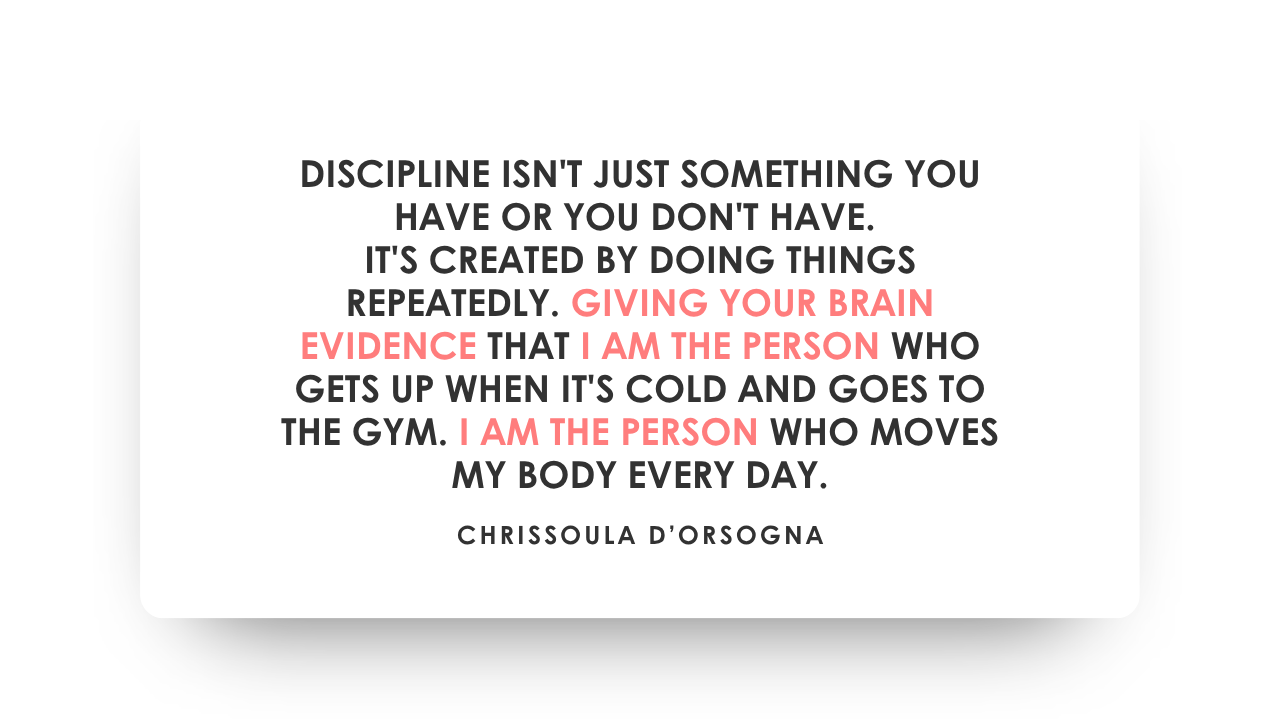
The other unplanned shift happened on the compulsory morning beach walks the program required. She says she could barely make it partway up the beach at first. Over the four and a half months, that turned into using the rehab's basic gym equipment (a rowing machine, some dumbbells) and discovering she liked how it felt. From there she enrolled directly in a TAFE fitness qualification, and has worked as a personal trainer and online coach for the past decade.
Why she thinks prisons don't fix the actual problem
Chrissoula's view, informed by her own time inside, is that custodial and parole systems focus heavily on job-readiness and compliance without addressing what she calls the replacement question… what people are meant to do instead of using, once the structure of jail or a program ends. She's tried, with limited success, to get access to run programs inside WA prisons (including Boronia Pre-Release Centre), citing the number of approvals required and uncertainty over how a program would need to demonstrate benefit to be approved.
Her current work is built around what she says actually held for her: fitness, nutrition, and sleep as daily structure. She now specialises in coaching women in their late 30s, 40s, and beyond… a focus that grew out of her own experience of perimenopause, which she says she'd never even heard properly explained until she began researching it for her clients.
-
In drug slang, a "hot shot" usually refers to a dose of heroin cut with, or immediately followed by, another substance such as methamphetamine, a practice sometimes called "speedballing." Combining a depressant like heroin with a stimulant puts extreme, opposing strain on the cardiovascular and respiratory systems, and Australian overdose monitoring has repeatedly flagged polydrug combinations (rather than a single substance) as a major factor in fatal opioid overdoses.
-
No, and this shifted some time ago. According to the Australian Institute of Health and Welfare (AIHW), hospitalisations and deaths from opioid poisoning in Australia have moved since 2000 from being predominantly heroin-related to being predominantly related to pharmaceutical (prescription) opioids. A legitimate injury or prescription, followed by reduced or cut-off access to the medication while the underlying pain remains, is a well-recognised route into opioid dependence more broadly, including, for some people, heroin.
-
A therapeutic community is a residential treatment model, often running for several months rather than weeks, built around structured daily routine, peer accountability, and a graduated system of responsibility within the community itself, rather than being primarily clinician-led or medication-focused. The model has its roots in mutual-support movements from the mid-20th century and remains one of the standard approaches used in longer-stay residential rehabilitation programs today.
-
Both substances suppress appetite while a person is using. Heroin by slowing digestion and dulling hunger signals, methamphetamine by acting as a stimulant that raises metabolism and reduces the desire to eat. Once someone stops using, appetite and digestion typically return to normal or above-normal levels while the body is also trying to recover from prolonged malnutrition, which commonly results in rapid weight gain in early recovery; a pattern addiction treatment literature describes consistently.
-
Perimenopause is the transitional period leading up to menopause, marked by fluctuating hormone levels that can cause symptoms such as disrupted sleep, mood changes, and joint pain well before periods stop altogether. Australian health guidance places the typical onset in a woman's mid-to-late 40s, though it can begin earlier, and the transition itself commonly lasts several years before reaching menopause (defined as 12 months without a period).
About Chrissoula D’Orsogna
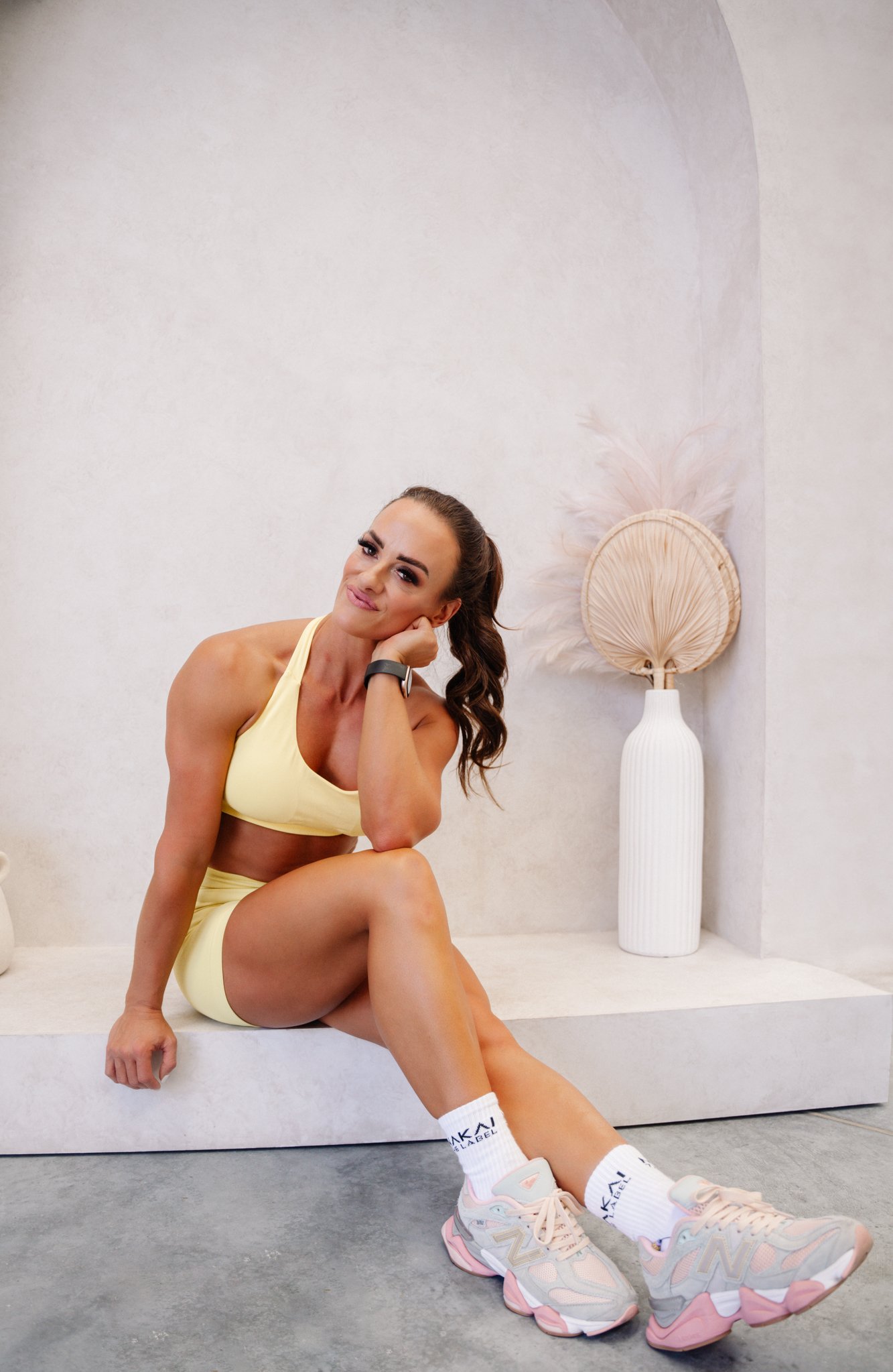
Chrissoula D'Orsogna is a Perth-based personal trainer and online coach who has spent the past decade helping clients rebuild their physical health after rebuilding her own.
After more than 20 years of heroin and methamphetamine addiction, incarceration, and homelessness risk, she got clean at 33 and found her way into fitness through a residential rehabilitation program.
She now runs Strong Bodies by Chrissoula, coaching both online and in person, with a particular focus on helping women in their late 30s, 40s, and beyond build strength, navigate perimenopause, and rebuild confidence through lifting, nutrition, and sleep.
👉 Want to work with Chrissoula? Follow Strong Bodies By Chrissoula on Instagram →
