
The Hidden Crisis in Men’s Lives | with John Rich
Thirty years in engineering and heavy industry. Sixteen-plus years on the front line of addiction, domestic violence, prison re-entry, and Aboriginal emotional wellbeing. A personal reckoning at 54 that he says taught him more than his counselling degree did.
John Rich is chairperson of Men's Health and Wellbeing WA, and he spends most of his time trying to answer one question: why do so many men wait until crisis before they reach out, and what actually gets through to them before that point?
NOW STREAMING ON ALL MAJOR PLATFORMS
This episode includes discussion of suicide, domestic violence, and incarceration. If anything in this conversation raises something for you, Lifeline (13 11 14), the Suicide Call Back Service (1300 659 467), and MensLine Australia (1300 78 99 78) are available for support.
Our full crisis services directory has more
In this episode, you'll hear:
👉 Men don't report mental health distress until it hits crisis levels— John points to a fathering study where men still believe the single best thing they can offer their kids is an income… not their time, not their presence.
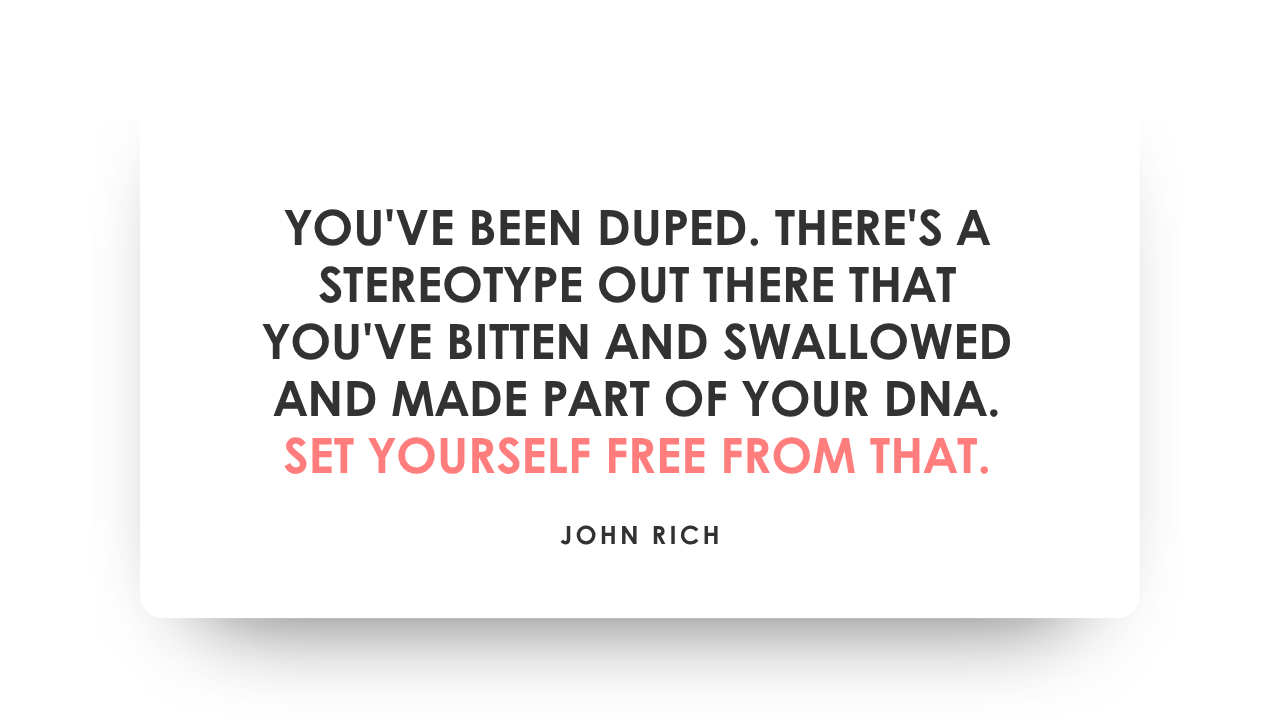
👉 50% of non-Indigenous suicides, and 85% of Indigenous suicides, follow a relationship breakdown— John connects that statistic directly back to a "guy code" that's enforced from the schoolyard onward, and that quietly strips boys of the relationship skills they'll need as men.
👉 He didn't feel like sensitivity was a strength until he was 54— sitting in a room full of men at a gathering two years after finishing his own counselling degree. What happened in that room changed how he sees his own emotional life entirely.
👉 "Men don't want to talk about it" is a myth he pushes back on hard.— In the men's groups he's part of, he says blokes will open up "so incredibly quickly… to the point of tears," once the space feels safe and judgement-free.
THE CONVERSATION
From engineer to counsellor: John's own turning point
John spent three decades in engineering and heavy industry with companies like BHP, building a career, a marriage, and a family of three kids along the way. But underneath it, he was running what he now recognises as a punishing internal script: you can't help yourself, John; how could you ever help other people?
Following what he calls an epiphany, he left the industry, went back to university to study counselling, and says it changed everything.. his relationships, his self-understanding, and eventually his career.
Years later, at 54, he attended a men's gathering and spent three days in a room with other men being openly sensitive and emotional. It was, he says, more validating than his entire counselling degree. He'd spent years believing sensitivity was a weakness to be hidden. That weekend, he realised it was actually his strength; the thing that gets him out of bed and makes him love his kids.
What Men's Health and Wellbeing WA actually does?
As the peak body for men's health in WA, the organisation doesn't provide direct services itself. Instead, it advocates for policy and funding, connects the dozens of smaller (often entirely volunteer-run) organisations working in the space, and tries to close the gaps between them.
One tangible example is the Blokes Book, now in a pocket-sized, wallet-friendly format, which lists contact details for the many low-profile support services around WA that men might not otherwise know exist.
John also sits on the national peak body (Australian Men's Health Forum) and the Global Action on Men's Health, giving WA's sector a direct line into what's working internationally, including the growing international footprint of the Australian-born men's shed model.
The "guy code," and why it starts so early
John draws on Terrence Real's concept of the "guy code" to explain why boys are funnelled away from emotional and relational skills well before adulthood.
Unlike the "girl code," he argues, the guy code is strictly and immediately enforced, by siblings, by family, by the schoolyard, punishing anything read as insufficiently masculine. By the time boys reach the final years of school, a well-paying, high-status career has become the accepted proxy for successful masculinity.
The problem, John says, is that those high-income careers frequently don't require or reward emotional or social intelligence, compounding the disconnect over decades.
He speaks from experience here: after 30 years in construction and engineering, he says any departure from the code was treated as an open invitation for bullying, and it took real, deliberate effort during his counselling training to "wake up" the emotional side of his own thinking.
Why relationship breakdown sits at the centre of the suicide statistics
Men account for roughly three-quarters of suicide deaths in Australia. John's read on the data is specific: around 50% of non-Indigenous suicides and about 85% of Indigenous suicides occur in the wake of a relationship breakdown.
He links this to a broader absence of relationship skills, including communication, listening, parenting, and co-parenting, that were never built into most men's upbringing in the first place. He's also careful with the connection between mental health and violence: people with mental health issues aren't inherently violent, he stresses, but people who are violent very often are carrying unaddressed mental health struggles, frequently rooted in early-life trauma.
Reframing vulnerability, one conversation at a time
Rather than asking men directly about their feelings, John has found more traction with indirect entry points: naming someone significant in their life and identifying what made that person matter (which, he says, almost always surfaces a person's core values); or, in a prison setting, asking not about a partner's parenting style but simply, "what does your child mean to you?"
He says that question alone reliably drops the emotional temperature of a room within moments. The other consistent finding: publicly recognising and applauding a quiet person's silence, rather than pushing them to talk, often does more to build trust than direct questioning ever could.
The message for anyone struggling silently right now
John closes with a practical acronym, HALT: check whether you're Hungry, Angry, Lonely, or Tired before making any big decision, be cautious with alcohol, and if things feel unbearable at night, wait and reassess in the morning.
Beyond that, his message is simple: reach out, whether to Lifeline, a mate, or a men's shed. And to anyone who feels like showing emotion makes them weak, or like no one could understand what they're carrying: you're not alone, and you've survived this far; you're closer to a breakthrough than you think.
-
A peak body is an umbrella organisation that represents and advocates for a whole sector, rather than delivering frontline services itself. In the case of Men's Health and Wellbeing WA, that means lobbying for policy and funding, connecting smaller service providers and volunteer groups with each other, and identifying gaps in support across the state, rather than running counselling sessions or programs directly.
-
Terrence Real is an American family therapist and author who has written extensively on male depression and socialisation. His concept of the "guy code" describes a rigid, informally enforced set of masculine norms, around stoicism, competitiveness, and emotional restriction, that boys are taught from a young age, often policed more strictly by peers and family than by any formal institution.
-
Yes. Data from the Australian Institute of Health and Welfare (AIHW) and the Australian Bureau of Statistics consistently shows that men account for around three out of every four suicide deaths in Australia each year, a pattern that has held for decades.
-
Men's sheds are community spaces where men, often older, gather to work on practical projects, tools, or shared activities in a low-pressure, non-clinical setting. The model originated in Australia and has since spread internationally, with national and international peak bodies (such as the Australian Men's Health Forum) supporting new sheds as they open in other countries.
-
HALT (Hungry, Angry, Lonely, Tired) is a simple check-in tool widely used in addiction recovery and mental health settings to flag basic, easily addressed states that can intensify distress or urges before someone acts on them. It's commonly recommended as a first step before making any significant decision during a difficult moment.
About John Rich
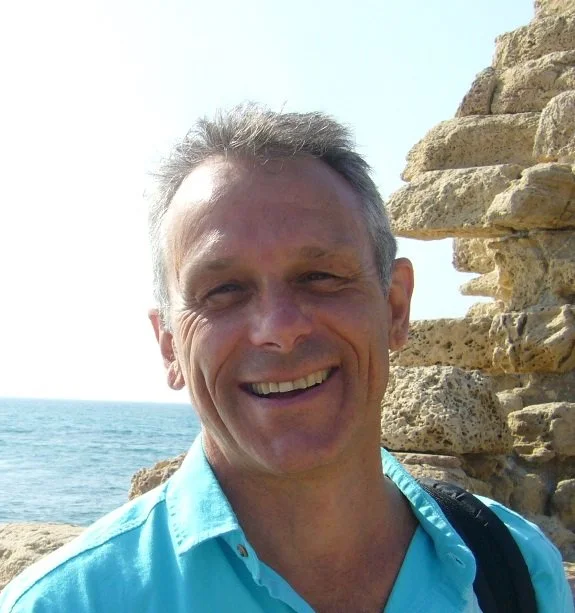
John Rich is chairperson of Men's Health and Wellbeing WA, the peak body for men's health in Western Australia. He spent 30 years working across engineering and large-scale industry, including with BHP, before retraining in counselling and moving into more than 16 years of frontline social services work spanning addiction, domestic violence, prison re-entry, family mental health, and Aboriginal emotional wellbeing.
He also serves as a director of the Australian Men's Health Forum and Global Action on Men's Health.
👉 Want to find these resources? Visit Men's Health and Wellbeing WA →
